Sep 11, 2026Sourcing Guides
How to Choose an Alternative Metal Ring Manufacturer for Your Jewelry Brand
Learn how to choose an alternative metal ring manufacturer: metallurgy experience, design review, sample finishing, and inlay quality checks for men's wedding bands and jewelry collections.
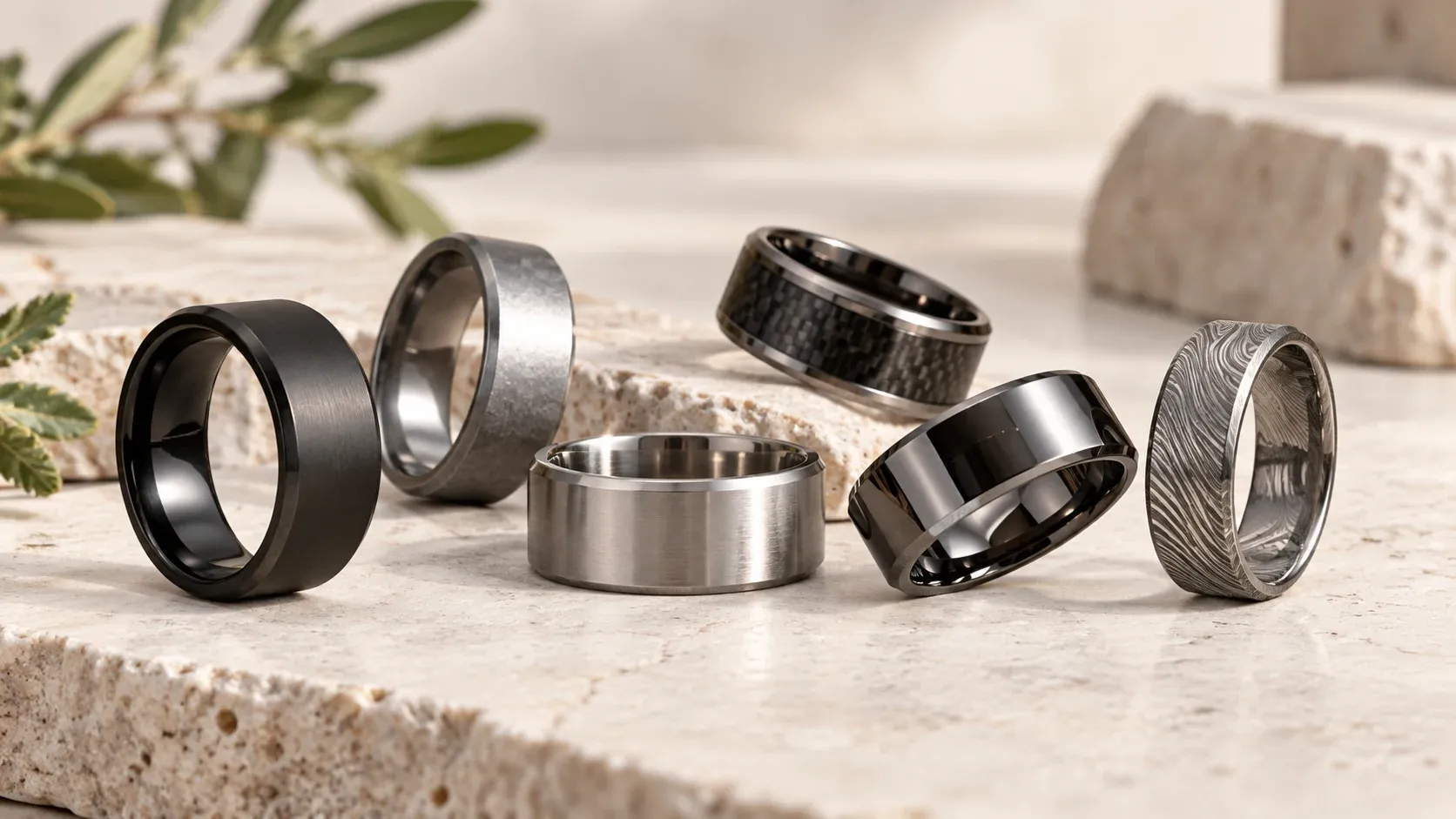
Alternative metal rings have become a core staple for men's wedding bands and contemporary jewelry collections.
However, materials like titanium, tantalum, black zirconium, and Damascus steel behave entirely differently from traditional gold or silver. They are not simply cast like precious-metal rings — they often require precision CNC turning, specialized tooling, and controlled surface treatments.
That means finding the right manufacturing partner is not just about finding someone who owns machines. It is about finding a team that understands the metallurgy.
1. Look for Proven Experience with Specific Alternative Metals
Not every jewelry factory works with the same materials, and experience does not automatically transfer from one metal to another.
A supplier skilled in stainless steel fashion jewelry may struggle with the machining tolerances of tantalum or the surface chemistry of black zirconium. Each material presents unique engineering demands:
• Pure Titanium: Lightweight and highly biocompatible, yet gummy during high-speed CNC turning, requiring precise tool cooling and feed control.
• Tantalum: Exceptionally dense, heavy on the finger, and ductile, but tough on cutting tools. It requires dedicated machining parameters to avoid surface tearing.
• Black Zirconium: Achieves its durable, ceramic-like black surface through a controlled thermal oxidation process — not a surface plating or PVD coating that chips off.
• Damascus Steel & Carbon Fiber: Require careful sealing, stabilization, and directional cutting to highlight visual grain contrast without delamination.
A capable manufacturer should understand these metallurgical differences before your project moves into production.
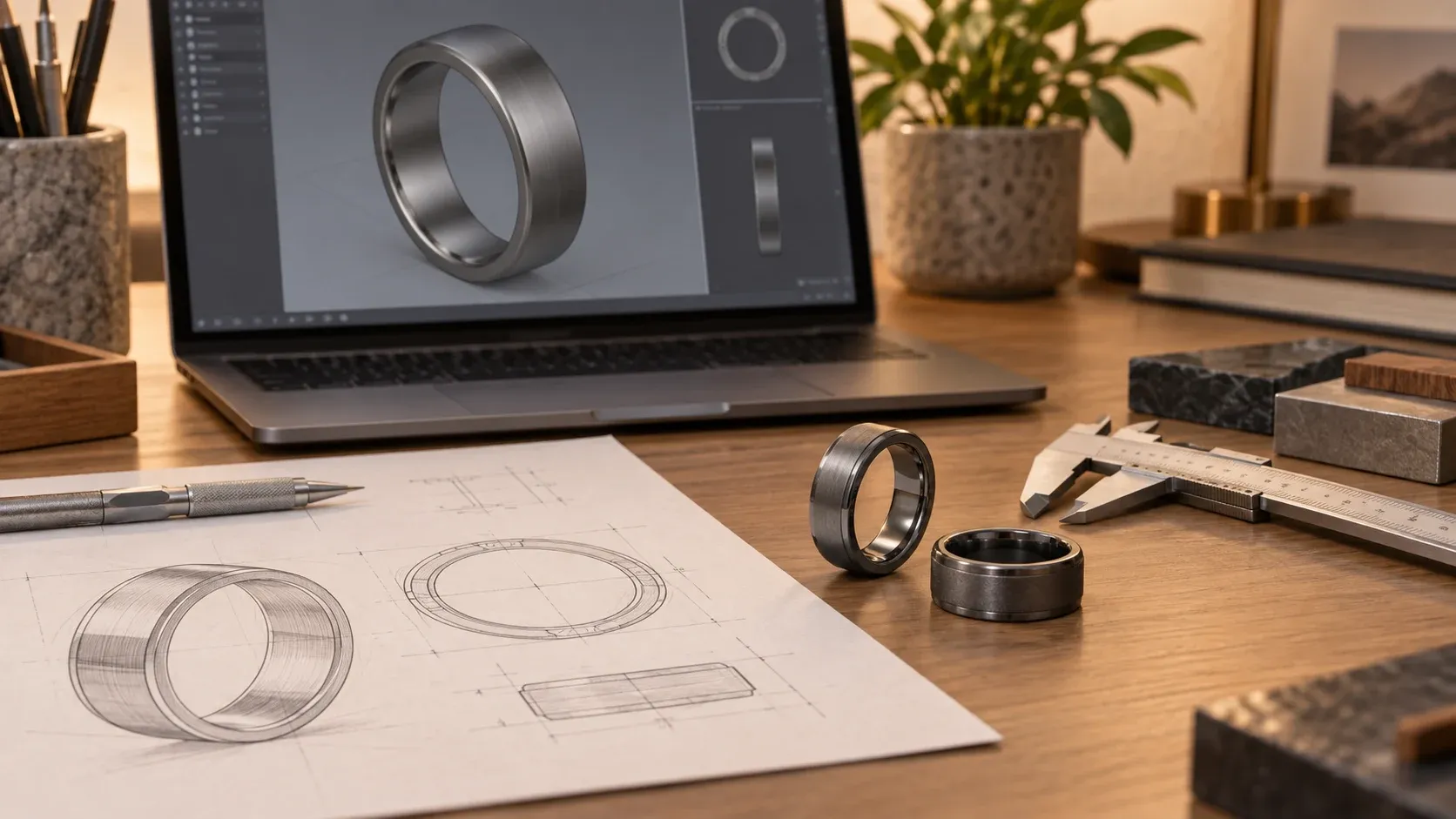
2. Check Whether Your Design Translates to Hard Metals
Not every ring design can be copied 1:1 from precious metals to alternative metals.
Designs originally modeled for lost-wax casting in gold or silver often feature delicate claws, deep undercuts, or organic contours. When switching to CNC-machined titanium or tantalum, the tooling paths and structural requirements change:
• Wall thicknesses may need adjustment for durability.
• Stone settings require specialized mechanical seats or flush-setting techniques.
• Inner comfort-fit profiles must be calibrated to the specific weight and density of the metal.
A reliable OEM ring manufacturer will not simply say “yes” to every CAD file.
They should review the design first and explain where adjustments are needed to maintain structural integrity and consistent quality.
3. Evaluate the Physical Sample: Finishing, Profiles, and Inlays
Two manufacturers can use identical raw bar stock and still produce very different rings.
In custom ring manufacturing, the real test of capability lies in the finishing:
• Surface Uniformity: Inspect the transition between satin-brushed, micro-sandblasted, and mirror-polished zones. The lines should be crisp and clean.
• Edge Comfort: Run your finger along the inner bevels and edges. A well-crafted comfort-fit band should feel completely smooth without sharp corner transitions.
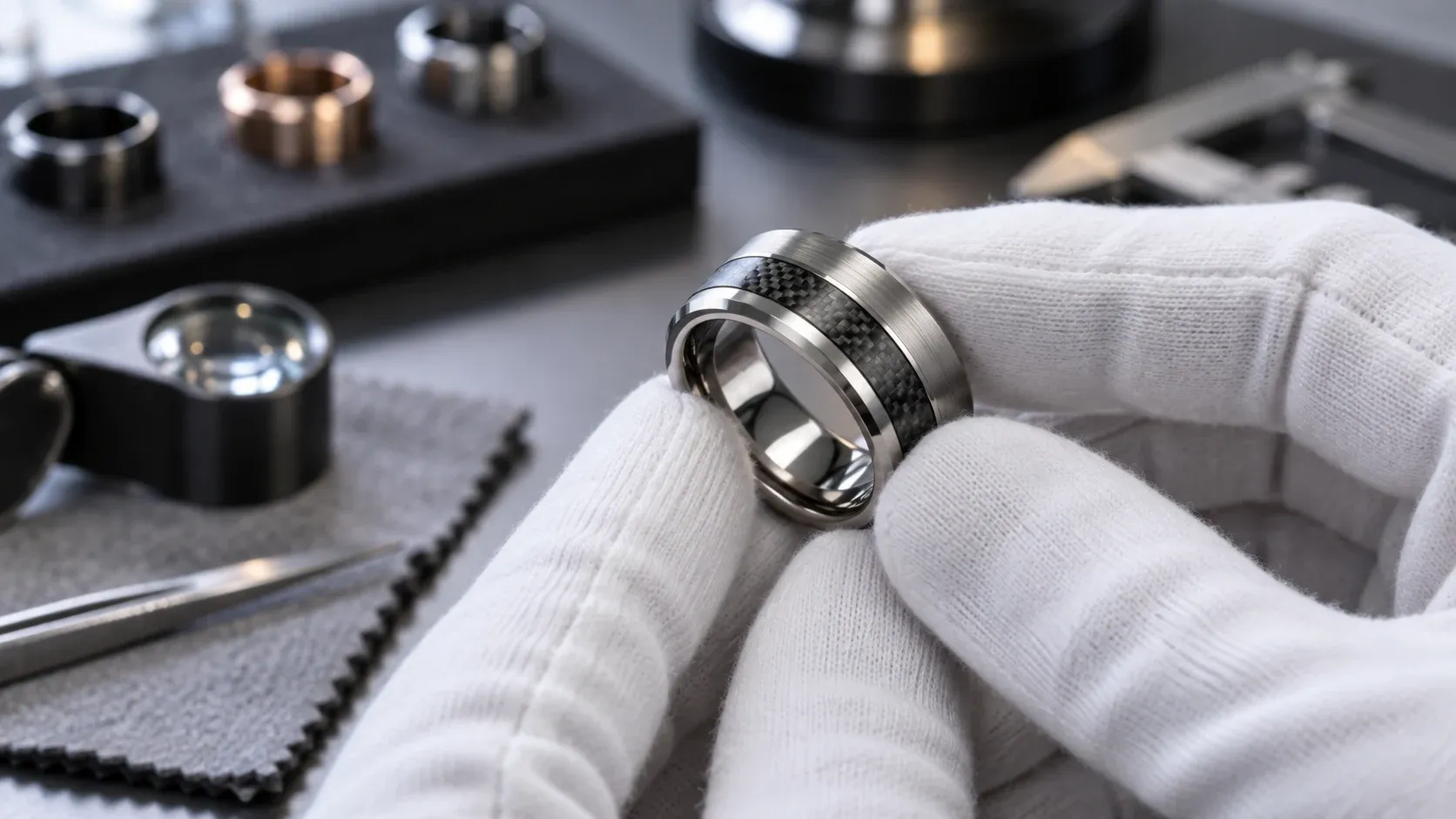
• Multi-Material Inlays: If your collection incorporates wood sleeves, carbon fiber cores, or precious metal wire inlays, check the seams under magnification. The joints must be seamless, flush, and free of adhesive residue.
• Dimensional Accuracy: Confirm that band width, thickness, and inner diameters match your technical drawings exactly.
A paid pre-production sample is the most reliable way to verify what the factory can consistently deliver across bulk orders.
Choose a Partner Who Understands the Full Collection
The right custom ring manufacturer does more than take an order. They act as an engineering partner who understands your design language, protects your proprietary files, and maintains finish consistency across your entire product line.
About FKS Jewelry
FKS Jewelry is a custom ring manufacturer based in Dongguan, China, with a monthly capacity of 40,000–50,000 rings. We specialize in precision CNC-machined bands across nine materials, including 316L stainless steel, pure titanium, tantalum, black zirconium, black titanium, cobalt, Damascus steel, and carbon fiber.
Whether your project starts from a 3D CAD file, a sketch, reference photos, or a physical sample, our team is ready to assist. Contact our engineering team to review your designs.