Brass Fashion Rings: The Gold-Tone Volume Line Behind Plated Programs
Brass fashion rings as a finished material: H62's warm base under gold-tone plating, brass vs 316L as plated bases, care and compliance — the volume tier guide.
Brass Fashion Rings: The Gold-Tone Volume Line Behind Plated Programs
Quick answer: Brass is not only for display dummies. As a finished jewellery material in its own right — H62 brass under gold-tone, rose gold-tone or white gold-tone plating — it powers the volume fashion tier: on-trend designs at accessible prices, finished in the warm tones customers read as gold. Its two working properties are a warm yellow base that supports gold plating naturally and a machining and forming character that takes crisp detail. Against 316L as a plated base, the practical read is: gold-tone programs build on brass; silver-tone and water-exposed looks often build on steel — and many brands run both. Plated brass's one honest condition is care: keep it dry, and the tier performs exactly as specced.
Most readers of this site meet brass in its other job — the display dummy lines that stand in for precious-metal collections. This article is about the second job. For brands building plated fashion lines — and for buyers comparing brass with steel as the base — here is the material decision, made properly.
On this page:
- Why brass for fashion rings?
- Two jobs, one metal: fashion brass vs display brass
- Brass vs stainless steel as a plated fashion base
- Care: the tier's one honest condition
- What designs define brass fashion lines?
- What buyers should ask about a brass program
- Frequently asked questions
Why Brass for Fashion Rings?
Brass (typically H62 in quality programs) brings two properties plated fashion rings need:
- Warm colour base — brass's own yellow tone supports gold-tone plating naturally; the finish sits on a compatible base rather than fighting a grey one. The same logic this series applies to colour-matching display lines applies here in the wearer's favour: when plating eventually softens at an edge, a warm base shows the change gently.
- Machining and forming character — brass takes crisp detailing, texturing and clean edges, which is why it has been the jeweller's base metal for centuries.
The business case is the tier it enables: designs that chase trends at prices that let customers buy three — stated as a tier fact, with the wear-and-care terms below attached from the start.
Two Jobs, One Metal: Fashion Brass vs Display Brass
The same alloy family does two different jobs in this industry, and conflating them confuses buyers:
| Brass fashion rings (this article) | Brass display rings | |
|---|---|---|
| Purpose | Worn by the end customer | Stand in for precious-metal stock |
| Finish standard | Wear-grade plating, care card attached | Photography- and handling-grade plating |
| Sold as | The product itself | A tool for selling another product |
| Sizing | Full size runs for retail | One standard display size per design |
| Success measure | Sell-through and returns rate | How completely the real stock stays off the floor |
FKS runs both programs — which is precisely why this guide keeps them in separate columns: a supplier fluent in both will never quote one with the other's specification.
Brass vs Stainless Steel as a Plated Fashion Base
| Brass (H62) | 316L Stainless Steel | |
|---|---|---|
| Base colour | Warm yellow — supports gold tones | Grey — truer under white/silver tones |
| Hand-feel | Solid, warm metal feel | Moderate |
| Detail work | Excellent — crisp engraving and texture | Excellent — crisp machining |
| Corrosion care | Needs plating integrity; keep dry | Highly corrosion-resistant bare |
| Typical tier | Gold-tone fashion programs | Silver-tone and industrial looks |
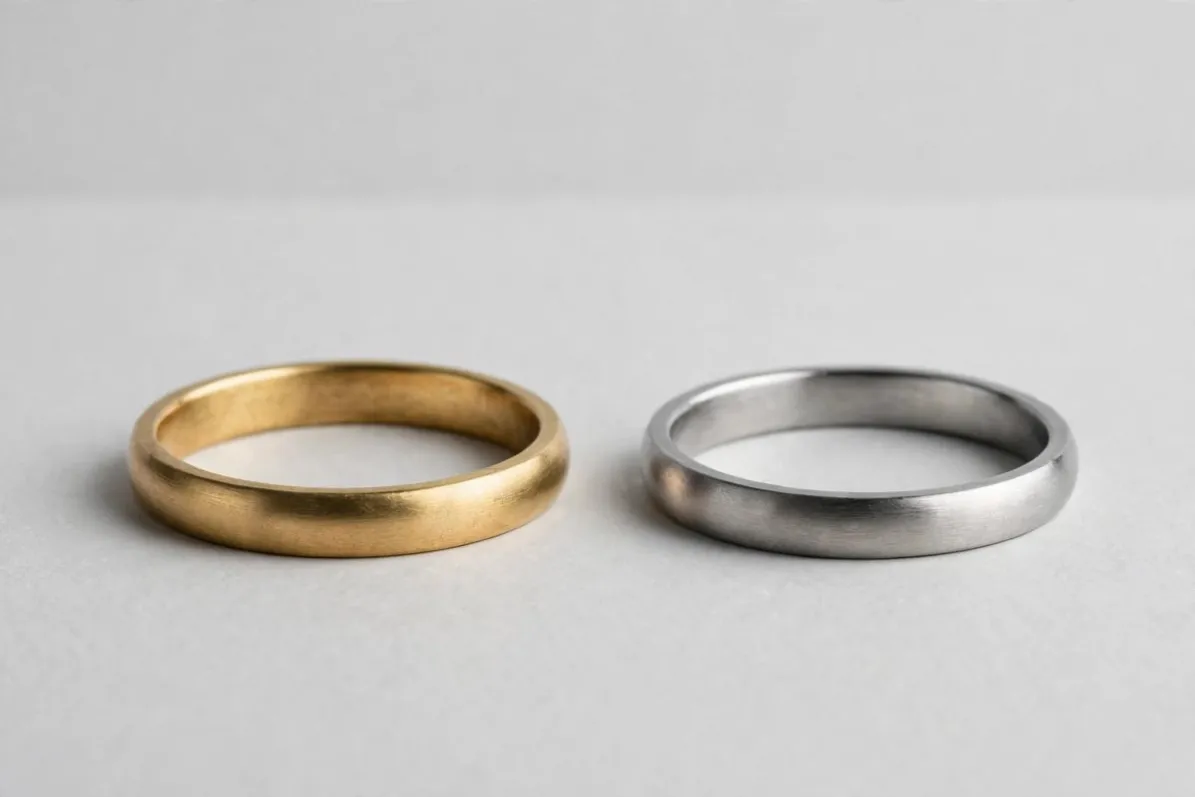
The practical read: gold-tone programs traditionally build on brass for its warm base and solid metal hand-feel; silver-tone and water-exposed looks often build on 316L. (Steel's own manufacturing story — certified bar to gauge-checked band — is told in How 316L Stainless Steel Rings Are Made.) Many brands run both bases in parallel, assigning each design to the base its tone and lifestyle brief actually needs.
Care: The Tier's One Honest Condition
Plated brass asks one thing: keep it dry. Remove before swimming and showering, wipe after wear, store out of bathroom humidity — the same plating-care discipline this series sets out for display lines, applied to a worn product. In exchange, be equally clear about what is not a defect: plating is a surface, and high-contact edges soften first over a life of wear; on brass, the warm base makes that softening read as mellowing rather than failure — one more reason the base choice matters. Brands that print the care card and the expectation together keep the tier's returns where they belong: low, and about sizing.
What Designs Define Brass Fashion Lines?
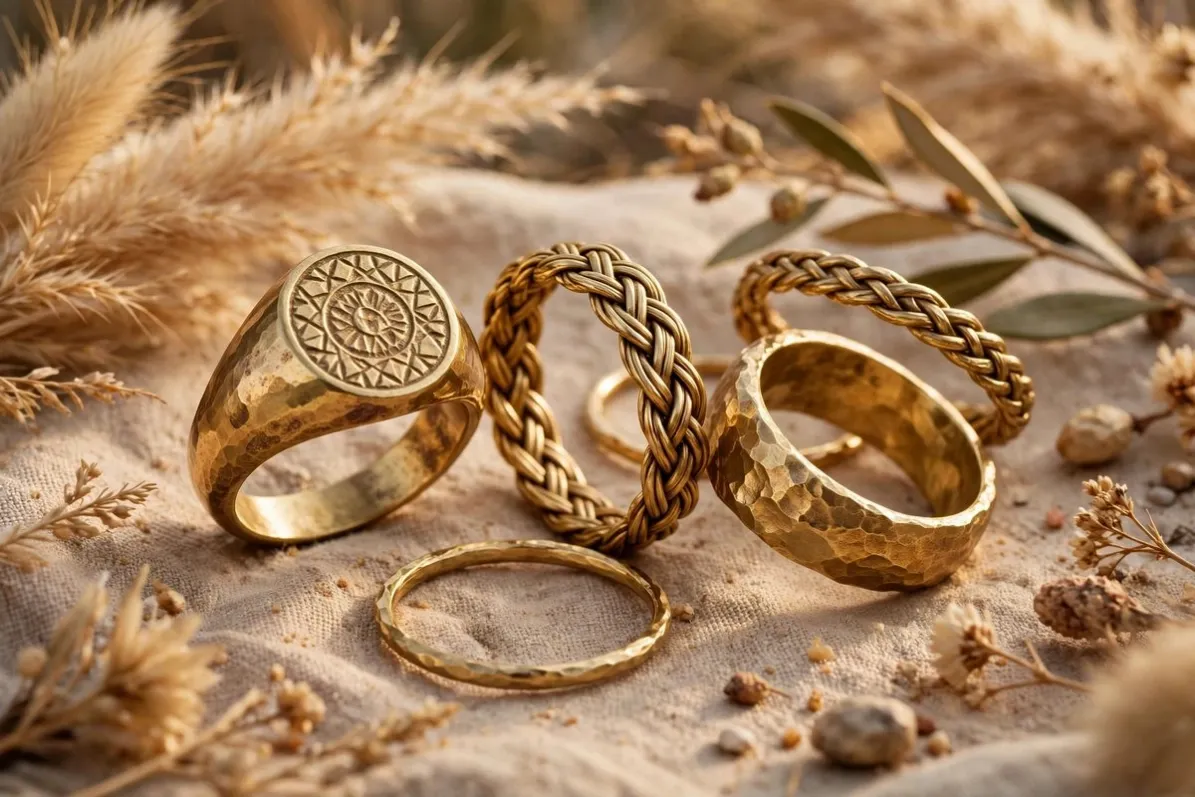
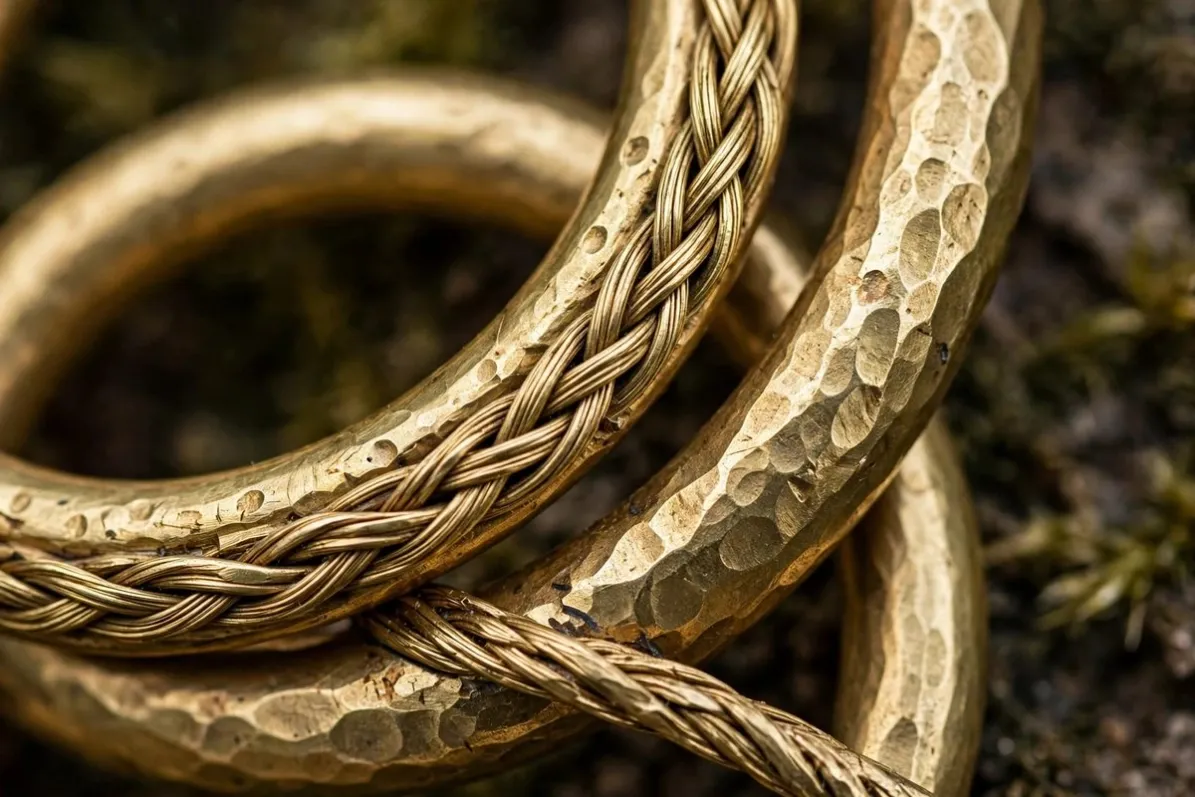
Signet shapes, braided and grooved bands, textured and hammered faces, two-tone combinations, and stone-set cocktail looks — brass takes them all, which is why it remains the volume tier's most flexible base. The design freedom is the tier's engine: because the base is economical to machine and form, a fashion line can run wide — many designs, fast refresh, trend shapes tested without precious-metal exposure — and let sell-through, not guesswork, decide what graduates to permanent lines.
What Buyers Should Ask About a Brass Program
- Plating process — what layers sit between base and final tone, and how adhesion is tested (ask for the process description, not thickness numbers).
- Care guidance — what the care card says, verbatim: plated brass wants to stay dry, removed before swimming, wiped after wear. If a supplier's card promises water-proof plated brass, the card is the problem.
- Detail capability — engraving depth, texture options and stone-setting on brass bodies, shown on samples in the buyer's own design language.
- Compliance — nickel release and REACH confirmation for EU-facing lines, with documentation scoped exactly: what was tested, on what material, against which standard. (FKS's own footing is stated in the About below, in exactly those scoped terms.)
Frequently Asked Questions
Is brass a good material for fashion rings?
For gold-tone volume programs, it is the traditional and still-correct answer: a warm base that supports gold plating naturally, excellent detail capability, a solid metal hand-feel, and economics that let a line run wide and refresh fast. Its conditions are care-based, not quality-based — plated brass kept dry performs as specced. Silver-tone and water-exposed briefs are where the comparison flips to 316L.
Will plated brass rings tarnish or lose their colour?
The plating is a surface, and like every plated product it softens first at high-contact edges over a life of wear — that is the category's physics, on any base. Brass's advantage is what shows through: the warm base makes gradual softening read as mellowing rather than a grey failure line. Water is the accelerant — the care rule (dry, wiped, removed for swimming) is what stretches the timeline from seasons to years.
Are brass fashion rings the same as FKS's brass display rings?
No — same alloy family, different jobs and different specifications. Fashion brass is the worn product: wear-grade plating, full retail size runs, care card attached. Display brass stands in for precious-metal collections: one standard display size per design, finished for photography and handling, sold as a tool rather than a product. FKS manufactures both, and quotes each against its own specification.
What compliance documentation should buyers expect for brass?
Documentation scoped exactly: what was tested, on what, against which standard. For FKS's brass, an SGS report is available for the tested H62 brass material sample, covering EU RoHS conformity — a material-level statement, quoted in exactly those terms and no wider. EU-facing lines should additionally confirm nickel release and REACH status with their supplier for the finished, plated product as sold.
Can brass rings be resized?
No — the same rule as every material in this range. Plated fashion rings are produced in full size runs and exchanged on size; resizing would break the plating and the economics alike. The tier's model makes this painless: wide design ranges are carried across standard size runs, so the exchange is a shelf swap, not a workshop job.
Why do brands run brass and steel bases in parallel?
Because tone and lifestyle split the range for them: gold-tone designs sit naturally on brass's warm base, silver-tone and water-exposed designs sit naturally on corrosion-proof 316L. Running both lets each design be built on the base its brief needs instead of forcing one base to impersonate the other — and a single supplier fluent in both keeps the two programs' finishing and quality language consistent.
How do brands spec a brass fashion program?
By base, tone and care: H62 brass confirmed; tone selected (gold, rose gold or white gold) with the plating process described and adhesion tested; design set chosen for brass's strengths (signets, braids, textures, two-tone, stone-set cocktail); full size runs; and the care card plus softening expectation written into the product page from day one. Add scoped compliance documentation for the destination market, and the program is specced the way it will actually be judged — on sell-through.
About FKS Jewelry
FKS Jewelry is a custom ring manufacturer in Dongguan, China, making rings to the designs of jewellery brands, wedding-ring companies, wholesalers and product developers. FKS manufactures brass (H62) fashion rings and wedding-style designs with gold-tone, rose gold-tone and white gold-tone plating — engraved, textured and stone-set — alongside its brass display-dummy programs, with an SGS report available for the tested H62 brass material sample (EU RoHS conformity). Its finished OEM program spans nine materials — stainless steel, titanium, black titanium, tantalum, black zirconium, cobalt, Damascus steel and carbon fibre for finished rings, plus brass across its fashion and display roles — on a monthly capacity of 40,000–50,000 rings. Programs start from a CAD file, a technical drawing, a product photo or a physical sample, with sample approval before batch production and work carried out under NDA. See the brass range at /products?category=brass-rings.
Bring your gold-tone line, and discuss your brass fashion program with our engineering team.
Related reading: